


Blog / Safety

Car Seat Mistakes To Avoid In Your Nissan | Albany, NY

BLOG_HEADER_5

Summer is the season to hit the road, and making sure we are all practicing the best safety procedures will keep your travels stress-free and everyone along for the ride safer. Driving the speed limit, slowing down in work zones, servicing your vehicle, and practicing defensive driving are all important things to be doing. But when it comes to your passenger's safety, many of us tend to fall short when it comes to the car seat. Everyone knows how important it is to ensure that your child’s car seat is properly installed, but the fact is many of us don’t even know if we are improperly installing the car seat. So in order to help give you the peace of mind that your car seat is installed correctly, or show you what you need to adjust, this week we have the most common car seat mistakes and why it must be corrected. We suggest you grab your car seat’s owners manual because every seat is different. If you have any questions, feel free to give us a call and we will do our best to help you get your seat safe!
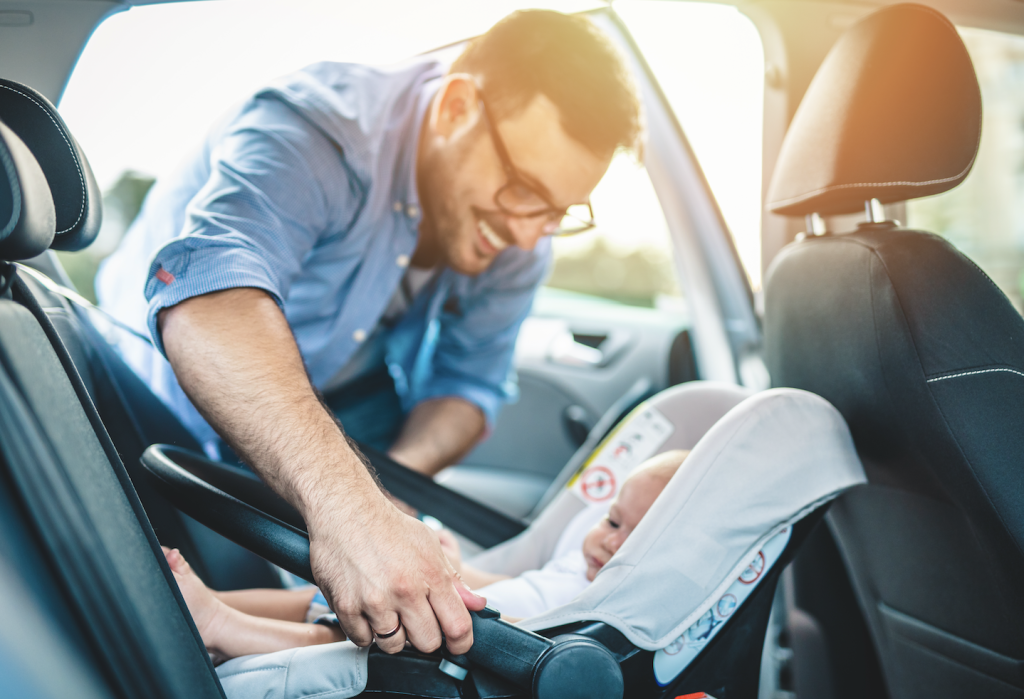
The child is turned face-forward too early

Babies must ride facing the rear until they are at least 1 year old and weighs 20 pounds - Experts recommend waiting even longer but it is up to the parent

Some parents don’t like facing the baby to the rear because they have trouble seeing the baby’s face, but it is important that the child doesn’t face forward in case of a crash. A solution is to get a childproof mirror to hang on the backseat headrest to see the baby.

The seat isn't installed tightly enough

Most people don’t know how tight they should be pulling the safety belt, the answer is as tight as possible. When you jiggle the area where the safety belt is pulled through, the chair should not move more than 1 inch in any direction!

Harness straps are too loose

A big mistake is not tightening the harness straps enough, this because they don’t want to make it too tight or uncomfortable for the child. The correct way is the straps should be tightened so that the slack can’t be pinched between an adult’s thumb and forefinger. This ensures that the child won’t slip too far down in the seat and that the child won’t fall out.

Infant seat angled incorrectly

The seat must be reclined no more than 45-degree angle, just enough so the child doesn't flop forward but if he/ she is positioned anymore than that they could be thrown out between the straps headfirst.

Harness straps are in wrong slots

When the child is facing the rear position, the straps should be in slots at or just below the shoulder. If the child is old enough to be facing forward, the straps should come through the uppermost slots.

Harness retainer clip is out of place

The clip should always be at the child’s armpit level.

The locking clip is out of place

If needed, it should be positioned no more than an inch from the safety-belt latch.

The safety belt isn't in locked mode.

This information will be provided to you in the owner’s manual of your car, determine what type of belts you have and follow the directions regarding how they must be used with a child-safety restraint.


Posted in:

Related Posts

BLOG_HEADER_1

Tips For Driving Safely In Autumn Storms | Albany, NY

Autumn is here! That means that we are getting ready to enter hurricane season, and even though we won’t be too affected up here in the Capital District, doesn’t mean we won’t be getting some heavy rains as a result. So this week we want to help ensure that our customers stay safe on the road in all conditions. Below you will find tips and tricks for safely driving through heavy storms/ flooding. And if you find that your vehicle needs repairs or even just a tune-up, let our team help you gain better peace of mind behind the wheel! Just schedule a test drive and stop into Destination Nissan! Driving in heavy rain: Turn your headlights on – the Highway Code says you must use them when visibility is seriously reduced Use fog lights if you like, but switch them off when visibility improves. Leave twice as much space between you and the car in front – it takes longer to stop in the wet. If your steering feels light due to hydroplaning, ease off the accelerator and slow down gradually. If you break down don't prop the bonnet open while you wait. Rain-soaked electrics can make it harder to start the engine. Driving during floods and standing water: Try to avoid standing water if you can. Don't drive into flood water that’s moving or more than 4 inches deep. Let approaching cars pass first if you are unsure of the depth Drive slowly and steadily so you don’t make a bow wave. Test your brakes as soon as you can afterward. Water can have a damaging effect on brakes, make sure they are working properly before you continue to drive Fast-moving water is very powerful: if strong enough your car could be swept away. Find an alternate route if the water is moving too fast to pass-through Watch out for: Look out for slip and trip hazards like curbs under the water. Manhole covers can get lifted and moved. Water levels can change quickly.

BLOG_HEADER_3

Tips For Travel During The Solar Eclipse! | Albany, NY

As many of you may know, this upcoming Monday, April, 8th, there will be a complete solar eclipse across parts of Mexico and North America. NASA predicts that roughly 31.6 million people live in the path of the eclipse and millions more are within a two-hour drive of the eclipse’s path. During the solar eclipse in 2017, an estimated 5 million people traveled to view the astronomical phenomenon. This caused severe traffic jams that lasted several hours on certain roadways. NASA has released an Eclipse Explorer Map showing the predicted path of the total solar eclipse so that you know where you’ll get the best view– or where you should try to avoid traveling to. Whether you’re planning to make the journey to see the eclipse, or are worried about how traffic could affect your commute, Destination Nissan is here with some tips to keep you safe on the roads! Be Prepared For Traffic If you’re traveling to a major city within the Eclipse’s Path be prepared for traffic jams. An eclipse of this magnitude is not predicted to happen again for another 20 years, so many people of all ages, and driving ability, will be out and about. Make sure to fill up your tank the day before, pack some water and snacks, and be prepared for bumper to bumper traffic for extended periods of time. Watch Out For Watchers Everyone is looking for the best possible view. Sometimes, that can lead people to plant themselves in some precarious positions alongside the road or even right in the middle of it. Children may be caught up in watching the spectacle and forget to watch where they’re going. Other drivers may be distracted by the phenomena. Make sure YOU stay alert! Focus On The Road If you find yourself on the road during the solar eclipse and can’t find a good place to pull over to view it, DO NOT try to split you attention between operating your vehicle and looking up at the sky. If worse comes to worse and you miss the eclipse, it’s not the end of the world. NASA with be publishing beautiful high-resolution pictures you can look at from the comfort of your couch! Protect Your Peepers If you haven’t already, remember to get proper eye protection for viewing the eclipse! You will not need this unless you are planning to look up at the sun directly, so there is no need to wear eclipse specific protectivewear while driving. Your regular sunnies will do! The Eclipse is estimated to pass over New York in stages from 2:00 pm to around 4:30 pm! The Destination Nissan team hopes some of these tips have helped you prepare for Monday! Stay safe out on the roads and enjoy this exciting phenomenon with family and friends!

BLOG_HEADER_5

The Physical and Mental Effects of Drowsy Driving | Albany, NY

We all know the dangers of driving drunk or distracted but do you know the third big D in unsafe driving? It's Drowsy. Drowsy driving can have serious physical and mental effects on your driving. When you're tired, your reaction times slow down, your vision can become blurry, and you may have trouble focusing. Here are some of the physical and mental effects of drowsy driving: Reduced reaction times. When you're tired, it takes longer for your brain to process information, which can lead to slower reaction times. Blurred vision. When you're tired, your eyes can become dry and strained, which can cause blurry vision. Decreased focus. When you're tired, it's harder to concentrate on the road and your surroundings. Impaired judgment. When you're tired, your ability to make good decisions can be impaired. Microsleep. Microsleep is when your brain falls asleep for a few seconds at a time, even when your eyes are open. This can be extremely dangerous when driving. To prevent the physical and mental effects of drowsy driving, make sure you get plenty of rest before you drive. If you start to feel tired on the road, pull over and take a short nap. It's always better to be safe than sorry.