

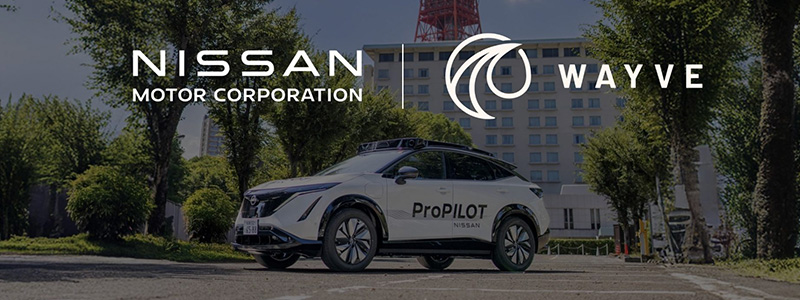
If you’ve ever driven Central Ave in the rain, merged onto I-90 with someone camping your blind spot, or tried to read the “logic” of a four-way stop that has none, you already understand the real problem with most driver-assist tech: it can feel polished in perfect conditions, then oddly unsure when driving gets human. That’s the reason this Nissan + Wayve announcement matters. Nissan signed definitive agreements to integrate next-generation ProPILOT with Wayve’s AI software across a broad range of vehicles, with Nissan targeting the first launch in Japan in fiscal year 2027.
This is not “a robot car is coming.” This is Nissan aiming for driver assistance that handles the messy middle of real driving, highways, cities, unpredictability, with smoother judgment and fewer “why did it do that?” moments.
You’re not alone if “AI” makes you roll your eyes
A lot of people hear “AI” and picture gimmicks, screens, subscriptions, and features that exist to impress a spec sheet. What Nissan is talking about here is a more capable co-pilot for the parts of driving that drain you: dense traffic, long highway stretches, and complicated urban patterns where attention fatigue is real. Nissan has been building ProPILOT for years (single-lane highway assistance first, then expanded capability later), and this partnership is positioned as the next step in making that assistance more intuitive across more situations.
“Who is Wayve” and why that part isn’t just Nissan trivia
You don’t need to know the company name to care about the outcome, but here’s the simple translation: Wayve’s approach focuses on learning from real-world driving behavior, and Nissan has already demonstrated an Ariya test vehicle running this kind of tech on Tokyo streets with a sensor suite that includes cameras, radars, and LiDAR. That combination is the point: real environments, real edge cases, real repetition, because that’s where driver assistance either earns trust or loses it.
For drivers who feel cautious about driver-assist tech
Skepticism is healthy. The best mindset is “assist,” not “autopilot.” The value proposition here is straightforward: better support when you’re still the driver. If a system helps reduce workload during the most tiring parts of driving, and it behaves more consistently in complex environments, that can translate to a calmer cabin and fewer near-miss moments created by confusion, fatigue, or delayed reactions. Nissan is framing this as an evolution of ProPILOT that expands capability and convenience while staying in the driver-assistance category.
What to tell people who say “every automaker is doing this”
True, lots of brands talk about “next-gen tech.” The differentiator here is scale and intent: multiple reports describe Nissan as Wayve’s first major automaker deal and position the rollout as a broad integration plan rather than a tiny pilot program.
Destination Nissan, Albany: what this signals for the near future
For shoppers who like to buy when the upgrade is genuinely worth it, this announcement is a marker that Nissan is investing in driving assistance that aims to feel more natural in real traffic, with a public timeline that points toward 2027 for the first model launch in Japan.
![[Facebook]](https://www.destinationnissan.com/blogs/1121/wp-content/plugins/bookmarkify/facebook.png)
![[LinkedIn]](https://www.destinationnissan.com/blogs/1121/wp-content/plugins/bookmarkify/linkedin.png)
![[Twitter]](https://www.destinationnissan.com/blogs/1121/wp-content/plugins/bookmarkify/twitter.png)
![[Yahoo!]](https://www.destinationnissan.com/blogs/1121/wp-content/plugins/bookmarkify/yahoo.png)
![[Email]](https://www.destinationnissan.com/blogs/1121/wp-content/plugins/bookmarkify/email.png)
Connect with us


Recent Blog Entries
- Nissan’s Next Gen AI is Anything But ‘Robot Car is Coming’
- Explore Destination Nissan’s Monthly Lease Offers on Popular 2026 Models
- Personalized Sound From Nissan Is For Drivers Who Refuse to Settle for “Good Enough” Audio
- Drive More for Less with Destination Nissan’s Monthly Offers
- For Drivers Who Want Smart Cars, Not Status Symbols: The 2026 Nissan Sentra and LEAF Earn Top Honors
